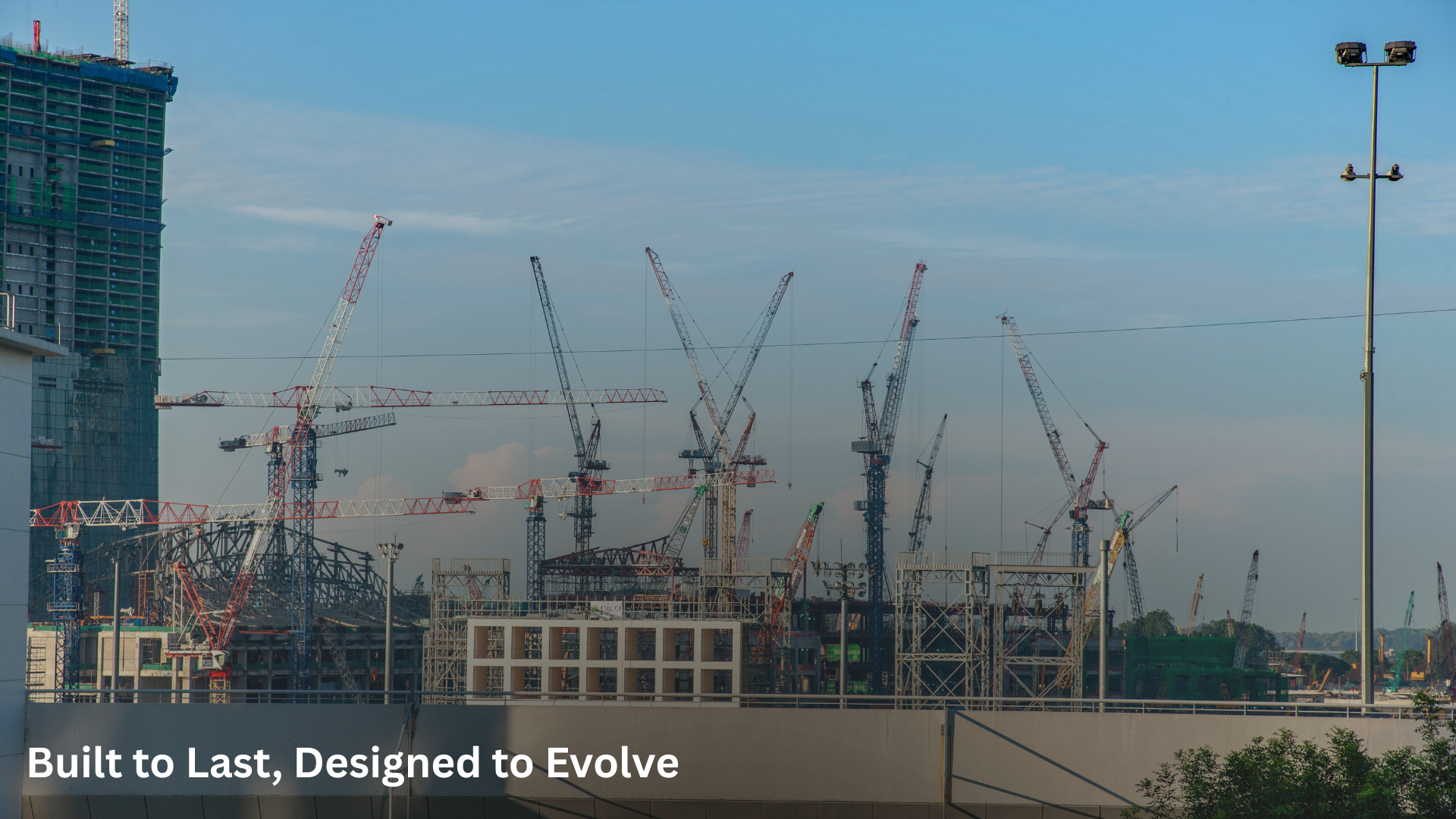
Every year, we celebrate what has lasted.
But what’s more interesting is how it has lasted.
Not everything that endures does so by staying the same.
In fact, the systems that last the longest are often the ones that change the most — just not all at once, and never without intent.
Rethinking What Makes Systems “Strong”
It’s easy to assume that strong systems are the ones that remain unchanged.
That reliability comes from stability, and stability comes from holding form.
But over time, the pattern tends to reverse.
Systems don’t fall behind only because they are weak.
Sometimes, they fall behind because they were built too specifically for a version of the world that has since shifted.
The shift is rarely dramatic.
More often, the world changes shape — gradually, unevenly, and sometimes without notice.
What once worked doesn’t suddenly break.
It simply becomes less aligned over time.
A System That Evolves in Place
This distinction becomes clearer when we look at systems that have endured over time.
You see this in familiar systems — from transport networks that are upgraded while still running, to digital services that evolve without disrupting daily use.
These systems are not preserved in their original form.
They are continuously adjusted, extended, and refined.
It was never about getting it right once.
It was about building something that could keep adjusting.
Designed for Correctness, or Designed for Change
Some systems are designed for correctness.
Others are designed for change.
Systems designed for correctness aim to get things right at a point in time.
They optimise for current conditions, known requirements, and immediate efficiency.
Systems designed for change take a different approach.
They assume that what is right today may not remain so tomorrow.
They are built with the expectation that adjustments will be needed.
The difference is subtle at the start, but decisive over time.
When Systems Outgrow Their Context
The same pattern shows up in organisations.
Many systems are built during earlier stages of growth — when operations are simpler, decisions are faster, and requirements are more predictable.
Over time, the organisation evolves.
Its structure changes. Its needs expand. Its environment shifts.
But the systems supporting it often remain shaped by earlier assumptions.
Most systems don’t stop working overnight.
They simply become less aligned with what the organisation is trying to do next.
The Quiet Signals
The signs are rarely dramatic.
They appear in small ways — easy to overlook at first, but increasingly difficult to ignore.
- Adjustments become harder than expected
- Workarounds start to feel normal
- Decisions are shaped by system limitations rather than business intent
Individually, these signals may seem manageable.
Together, they point to a deeper misalignment.
What It Means to Last
Longevity is often mistaken for durability.
But what lasts is rarely what stays the same.
It is what learns how to change — deliberately, and over time.
Systems that endure are not defined by how firmly they hold their form,
but by how well they adapt without losing what made them work in the first place.
Closing
Longevity is not about holding form.
It is about knowing when form needs to change.
What lasts is rarely what stays the same.
It is what evolves — deliberately, and over time.
As organisations evolve, so must the systems behind them. Recognising when that shift begins is often the first step.

Leave a Reply